

When a Hospital's Records Go Dark: What Vanderbilt's System Outage Should Make Us All Think About
There's something deeply unsettling about the idea that a hospital - one of the most prestigious medical centers in the country - can suddenly lose access to patient records. But that's exactly what happened at Vanderbilt University Medical Center this week, and honestly, the story deserves more attention than it's getting.
Vanderbilt Health experienced a system disruption that knocked out access to electronic health records, forcing the Nashville-based hospital to divert patients to other facilities. Let that sink in for a second. Patients who needed care were turned away - not because of a staffing shortage, not because of a natural disaster, but because computers went down.
Access has since been restored, and Vanderbilt has called the outage "brief." But if you were one of the patients affected, "brief" probably didn't feel so brief.
We've Built Healthcare on a Digital House of Cards
I don't say that to be dramatic. Electronic health records (EHRs) are genuinely one of the most important advances in modern medicine. They reduce errors, speed up communication between providers, and give doctors a complete picture of your health history at a glance. I'm not arguing we should go back to paper charts stuffed in manila folders.
But here's the thing - we've become so completely dependent on these systems that when they fail, entire hospitals grind to a halt. Vanderbilt isn't some small rural clinic. It's a major academic medical center, a Level 1 trauma center, a place people travel hundreds of miles to receive specialized care. And for a window of time, they couldn't pull up patient records.
Think about what that means practically. A doctor can't check what medications you're on. A nurse can't verify your allergies. A surgeon can't review pre-op notes. The whole machinery of modern healthcare depends on that digital backbone, and when it buckles, patient safety is immediately at risk.
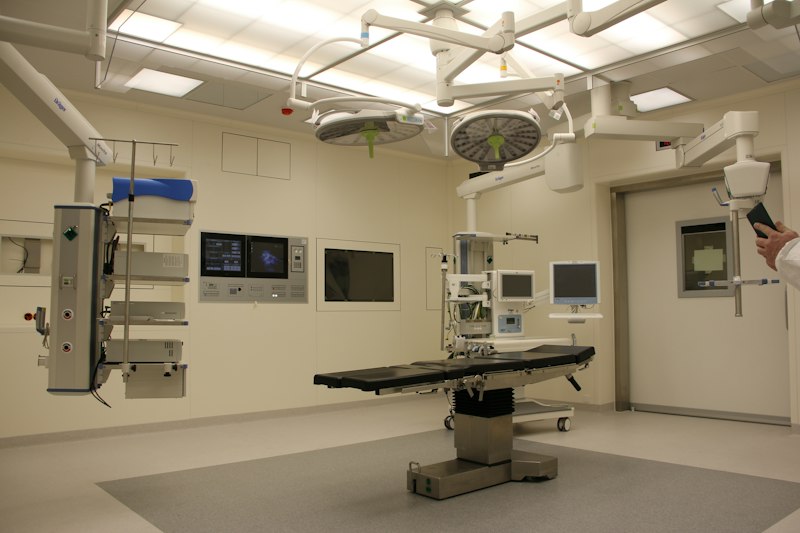
The decision to divert patients was probably the right call. It's better to send someone to another facility than to treat them without full information. But it raises uncomfortable questions about redundancy, backup systems, and just how prepared our hospitals really are for tech failures.
This Isn't Just a Vanderbilt Problem
It's tempting to focus on Vanderbilt specifically because they're in the headlines right now. But system outages at hospitals happen more often than most people realize. Scripps Health in San Diego got hit with a cyberattack in 2021 that disrupted operations for weeks. CommonSpirit Health, one of the largest hospital chains in the U.S., dealt with a ransomware attack in 2022 that affected facilities across multiple states. These aren't isolated incidents - they're a pattern.
And we don't even know yet what caused Vanderbilt's disruption. Was it a cyberattack? A software glitch? A hardware failure? The hospital hasn't shared details, which is pretty standard in the immediate aftermath of these events but also leaves patients in the dark (no pun intended) about whether their personal health information was compromised.
I think patients have a right to know more. If my medical records were inaccessible, I'd want to understand why. Was my data exposed? Is it safe now? What's being done to prevent this from happening again? A vague statement about a "brief outage" doesn't exactly inspire confidence.
The broader issue is that healthcare IT infrastructure often doesn't get the investment it deserves. Hospitals pour money into cutting-edge surgical robots and state-of-the-art imaging equipment - as they should - but the unsexy work of maintaining robust, redundant digital systems sometimes takes a back seat. Until something breaks.
There's also the question of what "analog" backup plans look like in 2025. Do hospitals still train staff on how to function without EHRs? Do they run drills for system failures the way they run fire drills? Some do. Many don't.
I'm not trying to alarm anyone. Vanderbilt is a world-class institution, and they clearly handled the situation by prioritizing patient safety over throughput. That matters. But this should be a wake-up call - not just for Vanderbilt, but for every hospital system that assumes the digital infrastructure will always be there when they need it.
Because one day, maybe at the worst possible moment, it won't be. And the question isn't whether that will happen again. It's whether we'll be better prepared next time.